Hybrid App Development: A Comprehensive Guide to Building Cross-Platform Apps

What Is Hybrid App Development?
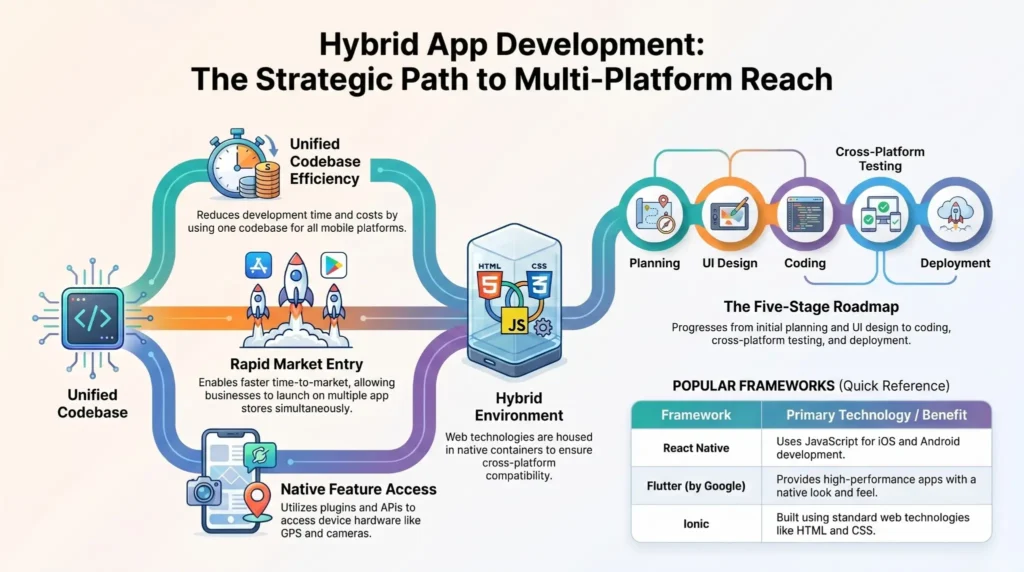
Hybrid app development involves creating applications that can run on multiple platforms using a single codebase. These apps combine elements of both native and web apps, offering the best of both worlds. Hybrid apps are built using web technologies like HTML, CSS, and JavaScript and are then wrapped in a native container that allows them to run on various operating systems such as iOS, Android, and the web.
Reasons for Adopting Hybrid App Development
There are numerous reasons why businesses and developers opt for hybrid app development. First and foremost, hybrid apps save significant time and resources, as they allow developers to use a single codebase for both iOS and Android platforms. This makes it easier and more cost-effective to maintain the app in the long run. Hybrid apps also benefit from quicker time-to-market, meaning businesses can launch their apps sooner. Furthermore, they provide access to device features through plugins and APIs, which allows developers to deliver a native-like experience while still reaping the benefits of cross-platform compatibility.
Popular Frameworks and Tools Used in Hybrid App Development
A variety of frameworks and tools are available to facilitate hybrid app development. Some of the most popular include React Native, which uses JavaScript to build apps for both iOS and Android. Another popular tool is Ionic, a framework that allows developers to build apps using web technologies like HTML, CSS, and JavaScript. Flutter, by Google, is another widely used framework, offering a fast and efficient way to develop apps with a native look and feel. Other tools like Xamarin and PhoneGap provide additional options for developers based on their specific needs and preferences.
Stages of Hybrid App Development
Hybrid app development is a multi-stage process that involves several key phases. The first stage is planning, where businesses assess their goals, target audience, and market research to define the app’s features. Once the planning phase is complete, the design phase begins, focusing on creating an intuitive and engaging user interface. After the design is approved, the development phase kicks off, where the actual coding of the app takes place using the chosen framework. The testing stage follows to ensure that the app works flawlessly across all platforms. Finally, the deployment stage sees the app being published to app stores like Google Play and the Apple App Store.
Benefits of Hybrid App Development
Hybrid app development offers several significant advantages for businesses. One of the most appealing benefits is the cost-effectiveness of having a single codebase for multiple platforms. This reduces both development and maintenance costs. Hybrid apps are also known for their faster development times, which helps businesses get their products to market more quickly. Additionally, hybrid apps provide cross-platform compatibility, meaning businesses can reach a broader audience without the need for multiple versions of the app. Finally, hybrid apps can access device features like GPS and the camera through plugins, further enhancing the app’s functionality.
Challenges of Hybrid App Development
Despite its many advantages, hybrid app development is not without its challenges. One of the main drawbacks is that hybrid apps may not perform as well as native apps, especially when it comes to complex, resource-intensive tasks. Additionally, while hybrid apps can access device features, they are often limited compared to native apps, which can result in a less seamless user experience. There are also design challenges, as hybrid apps must work well across different platforms, each with its unique design guidelines. Finally, long-term maintenance can be tricky, as plugins and frameworks might need constant updates to stay compatible with new OS versions.
Is Hybrid Mobile App Development Best for Your Business?
Whether hybrid app development is the best choice for your business depends on your specific needs and goals. If you’re looking to launch an app quickly across multiple platforms without investing in separate native apps, hybrid app development can be a great option. It’s particularly useful for businesses with limited budgets or those looking to test the market before investing heavily. However, if your app requires advanced features or extremely high performance, native app development might be a better choice. Hybrid apps can struggle with performance in situations that demand intensive processing power or intricate device integration.
The Future of Hybrid App Development
The future of hybrid app development looks promising, with continuous improvements to frameworks and tools. New technologies like Flutter and React Native are consistently evolving, making it easier to build high-performance hybrid apps that feel more like native apps. Additionally, the growing trend of Progressive Web Apps (PWAs) is pushing the boundaries of what hybrid apps can do, offering even more native-like experiences in a cross-platform format. As hybrid app frameworks continue to improve, they are expected to become an even more attractive option for businesses looking to maximize efficiency without compromising on quality.
Wrapping Up
Blockchain applications need to function seamlessly across various platforms and devices. Compatibility testing confirms that the blockchain application works on different operating systems, web browsers, and mobile devices, allowing users to access it from any platform.
Categories
Latest Posts