
Professional Blockchain Application Testing Services for Improved Security and Performance
Blockchain technology is rapidly transforming industries by providing secure, transparent, and decentralized solutions. However, just like any other software or application, blockchain applications need to be thoroughly tested to confirm their reliability, security, and efficiency. Blockchain application testing is a complex process that requires specialized services, tools, and methodologies. We will explore blockchain application testing services, best practices for testing blockchain applications, and how to effectively test blockchain applications.
What Is Blockchain?
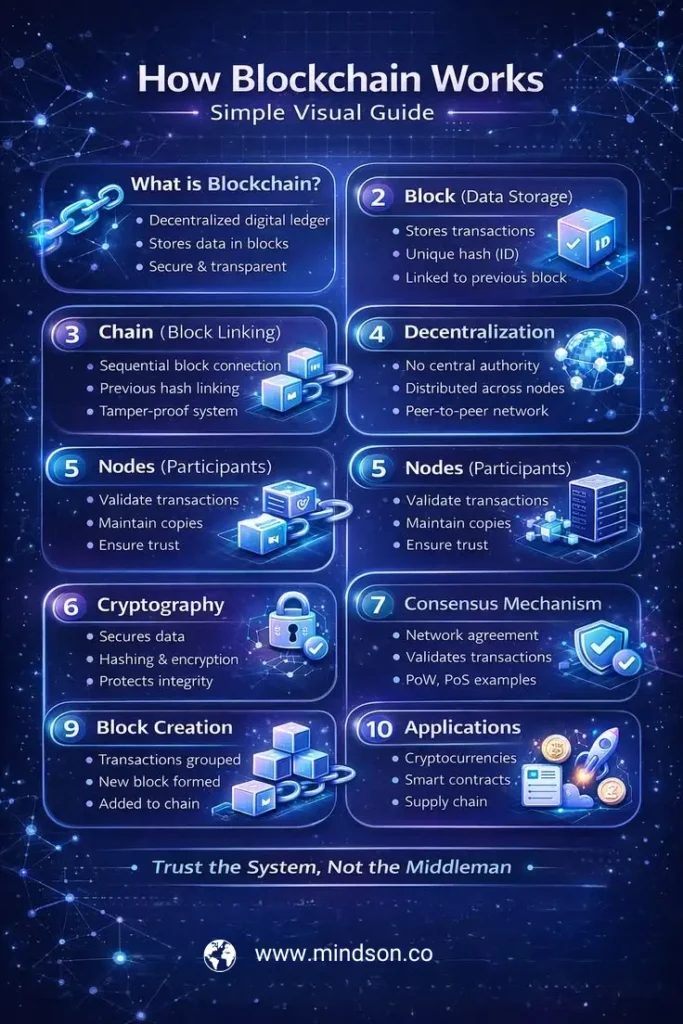
Blockchain is a decentralized, digital ledger technology that securely records transactions across multiple computers, confirming that the data is transparent, tamper-resistant, and immutable. It operates by storing transaction data in blocks, which are linked together in chronological order to form a chain. Each block contains a timestamp, transaction details, and a unique cryptographic hash of the previous block, making it nearly impossible to alter or delete information without being detected. Blockchain is most commonly associated with cryptocurrencies like Bitcoin, but it has a wide range of applications in various industries, including supply chain management, healthcare, finance, and voting systems, due to its ability to provide secure, transparent, and verifiable records without the need for intermediaries.
Blockchain Application Testing: What You Need to Know
Blockchain application testing refers to the process of evaluating blockchain-based applications to confirm they function correctly and securely. Unlike traditional applications, blockchain applications come with unique challenges, such as the decentralized nature of the technology, smart contracts, consensus algorithms, and immutability of data. The primary goal of blockchain application testing is to identify vulnerabilities, confirm the system operates as expected, and validate that transactions are accurately recorded. Testing helps to verify that the blockchain application adheres to both functional and non-functional requirements, such as performance, security, and scalability.
Best Practices for Testing Blockchain Applications
Blockchain application testing involves a combination of techniques to confirm robustness, security, and performance. Here are some of the best practices that organizations can adopt to achieve effective testing:
Functional Testing
Functional testing is the foundation of any application testing process, and blockchain applications are no different. This type of testing confirms that the blockchain application behaves according to its specifications and requirements. It involves testing smart contracts, consensus mechanisms, transaction validation, and data integrity.
Security Testing
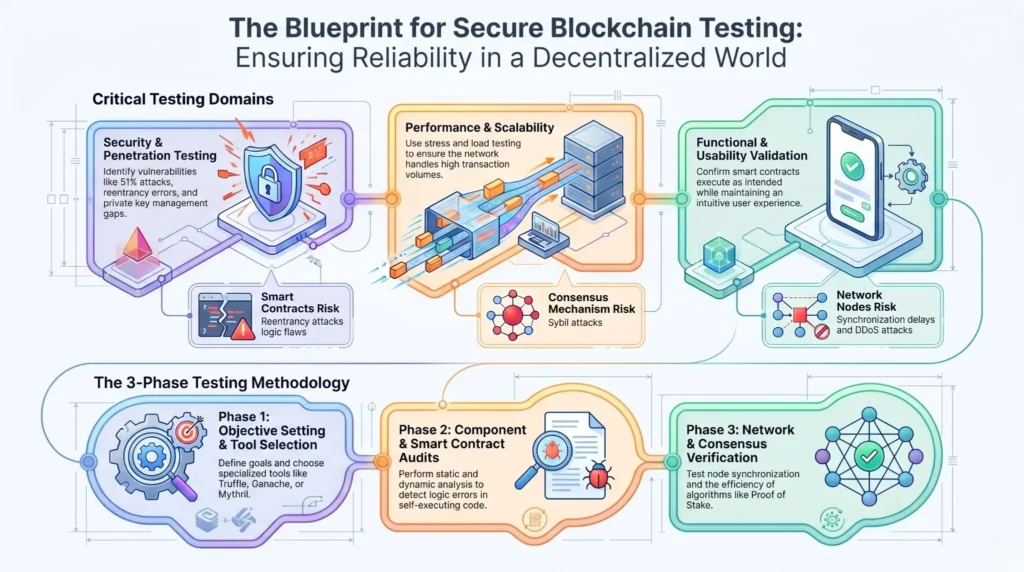
Security is one of the most critical aspects of blockchain applications due to their decentralized nature and sensitivity to unauthorized access. Penetration testing and vulnerability assessments should be conducted to identify potential security threats, such as 51% attacks, double-spending attacks, and other vulnerabilities in the consensus mechanism and smart contracts.
Performance Testing
Blockchain applications often require handling high volumes of transactions, making performance testing essential. This includes stress testing to simulate heavy traffic, load testing to assess how the system behaves under varying conditions, and scalability testing to determine whether the blockchain can scale as needed.
Usability Testing
Usability testing is crucial for confirming that users can interact with the blockchain application easily and intuitively. This includes testing user interfaces (UI) and user experience (UX) to confirm they are simple, responsive, and efficient.
Compatibility Testing
Blockchain applications need to function seamlessly across various platforms and devices. Compatibility testing confirms that the blockchain application works on different operating systems, web browsers, and mobile devices, allowing users to access it from any platform.
How to Test Blockchain Applications
Testing blockchain applications requires a detailed and methodical approach. Here are some steps to follow for effective blockchain testing:
Define Testing Objectives
The first step in testing blockchain applications is to define the testing objectives. What do you want to achieve through testing? These objectives could include verifying the correctness of the blockchain’s functionality, validating security features, or testing the scalability of the network.
Choose the Right Blockchain Testing Tools
There are various blockchain testing tools available that can assist with automated and manual testing. Some popular tools include Truffle, Ganache, and Mythril. These tools can help simulate blockchain transactions, analyze smart contracts, and detect vulnerabilities in the application.
Conduct Smart Contract Testing
Smart contracts are self-executing contracts with the terms of the agreement directly written into code. Testing smart contracts is crucial to confirm they function as expected. This involves running static analysis, dynamic analysis, and code audits to identify potential vulnerabilities, such as reentrancy attacks or logic errors.
Perform Node Testing
Blockchain networks consist of multiple nodes that work together to validate transactions and maintain the integrity of the blockchain. Node testing confirms that each node operates correctly and synchronizes effectively with other nodes in the network. It also involves testing the consensus mechanism, confirming that nodes can reach an agreement on the state of the blockchain.
Test the Consensus Mechanism
The consensus mechanism is responsible for maintaining the decentralized nature of the blockchain. Testing different consensus algorithms, such as Proof of Work (PoW), Proof of Stake (PoS), and Byzantine Fault Tolerance (BFT), is critical for confirming the network’s security and efficiency.
Test Interoperability
Blockchain applications often need to interact with other blockchain networks or external systems. Interoperability testing confirms that the blockchain application can communicate effectively with other blockchain systems or traditional IT infrastructures.
Testing Blockchain Applications: Key Areas to Focus On
Testing blockchain applications requires focus on several key areas to confirm a secure and reliable system. Let’s explore some of the critical aspects to consider when testing blockchain applications.
Transaction Validity
Blockchain applications rely on the accurate validation of transactions. It’s essential to test that the transaction data is correctly recorded on the blockchain ledger, and no unauthorized transactions are allowed. Test cases should include checking whether transactions are executed as per the defined rules and that invalid transactions are rejected.
Smart Contract Functionality
Smart contracts are self-executing programs on the blockchain that automatically execute actions when predefined conditions are met. Testing smart contracts confirms that they are free from errors, and the logic implemented within them is correct. Developers should conduct manual and automated testing to confirm that smart contracts are secure, efficient, and execute the desired functions.
Security Penetration Testing
Given the decentralized and open-source nature of blockchain, it’s crucial to conduct application security penetration testing. This testing aims to identify potential vulnerabilities that hackers might exploit. Common penetration testing areas for blockchain applications include smart contract vulnerabilities, network weaknesses, and flaws in the consensus mechanism. Penetration testing is often conducted in phases, including information gathering, vulnerability scanning, exploitation, and reporting. Once vulnerabilities are identified, they should be mitigated through code updates, additional security measures, or protocol changes.
Data Privacy
Blockchain applications often deal with sensitive data that must be protected. Testing data privacy features confirms that personal or confidential information is stored and shared securely, in compliance with relevant regulations such as GDPR or HIPAA.
Scalability and Load Testing
Blockchain applications must be able to handle a large volume of transactions without compromising performance. Scalability and load testing should simulate high traffic scenarios to identify how the application performs under stress and whether the blockchain can scale accordingly.
Network and Node Testing
Testing the blockchain network confirms that all nodes can communicate with each other, synchronize data, and maintain the integrity of the blockchain. It’s essential to verify that nodes can handle peak loads, recover from network failures, and continue functioning without interruption.
Application Security Penetration Testing for Blockchain
Application security penetration testing is a critical part of testing blockchain applications, as it helps identify weaknesses in the application and blockchain network. Blockchain is decentralized, but it is not invulnerable to security threats. Penetration testing focuses on finding potential vulnerabilities that hackers can exploit, such as:
- Smart contract vulnerabilities: Issues like reentrancy attacks, logic flaws, or mishandling of user funds.
- Network vulnerabilities: Problems with the communication between nodes, including DDoS attacks or man-in-the-middle attacks.
- Consensus mechanism flaws: Security issues in the blockchain’s algorithm, such as 51% attacks or Sybil attacks.
- Private key management: Security gaps in how private keys are stored and managed, which could lead to unauthorized access.
Penetration testing should be performed regularly to identify new vulnerabilities and mitigate emerging risks.
Conclusion: Ensuring the Quality of Blockchain Applications
Testing blockchain applications is essential for confirming the security, functionality, and scalability of decentralized applications. By adopting best practices such as functional, security, performance, and interoperability testing, organizations can confirm that their blockchain applications are secure, reliable, and ready for production. Moreover, regular application security penetration testing helps protect the application from external threats, while smart contract and node testing confirms that the blockchain’s decentralized architecture works effectively. By following a comprehensive testing approach, developers can mitigate risks and deliver high-quality blockchain solutions.
Categories
Latest Posts